VideoExpress AI (Honest) Review 2026: Features, Pricing & Verdict
VideoExpress AI (Honest) Review 2026: Features, Pricing & Verdict
AI video tools have gone from novelty to necessity in about two years, and the market has gotten crowded fast. If you’re still comparing the leading platforms, check out my guide to the best AI video generators before deciding which one fits your workflow.
Runway, Pika, Synthesia, HeyGen — the list keeps growing, and so do the monthly bills that come with most of them.
VideoExpress.AI enters that space with a different pitch: turn text and images into finished video, skip the subscription fatigue, and pay once.
That claim is easy to make and hard to back up.
Plenty of “lifetime deal” AI tools have burned early adopters with features that quietly get nerfed, support that goes silent, or output quality that doesn’t hold up outside a demo reel.
So the real question isn’t whether VideoExpress.AI can generate a video — it’s whether it holds up under actual, repeated use for the kind of content creators, marketers, and small businesses need week after week.
I spent time testing the platform across different use cases, from short-form social clips to branded explainer content, to see where it delivers and where it doesn’t.
This VideoExpress AI review covers what it actually does, how it performs against that one-time-payment promise, what it costs once you factor in the upsells, and who it’s genuinely a good fit for — and who should probably look elsewhere.
Overview of VideoExpress.AI
|
Сrеаtоr
|
Рrоԁuсt
|
Оffісіаl Sіtе:
|
|---|---|---|
|
Paul Ponna and Sid Diwar
|
VideoExpress AI
|
https://videoexpress.ai
|
|
Frоnt-Еnԁ Рrісе:- $179
|
||
What Is VideoExpress AI?
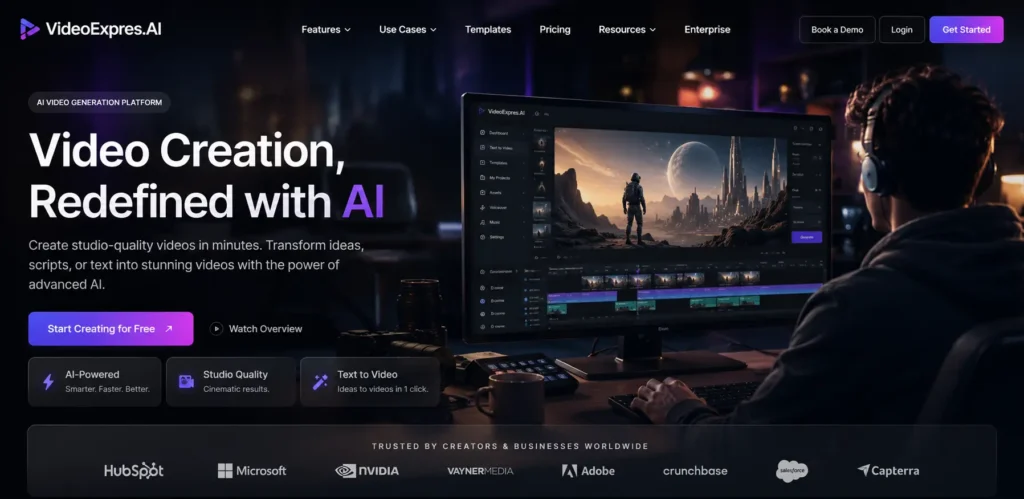
VideoExpress AI is an AI-powered video creation platform that turns text prompts and images into complete, visually polished videos.
It’s built to be accessible across skill levels, so whether you’ve never touched video editing software or you do this professionally, the learning curve stays manageable.
The platform covers a broad range of use cases, from marketing and educational content to entertainment and social media clips, without asking you to learn a technical toolset or commit to an ongoing subscription just to get started.
What makes VideoExpress AI stand out isn’t just what it can do, it’s the fact that it pairs a genuinely useful feature set with pricing that doesn’t punish regular use.
That combination is rarer than it should be in this space, and it’s a big part of why the platform has earned a solid reputation among creators looking for a practical, budget-friendly option.
Meet the founders
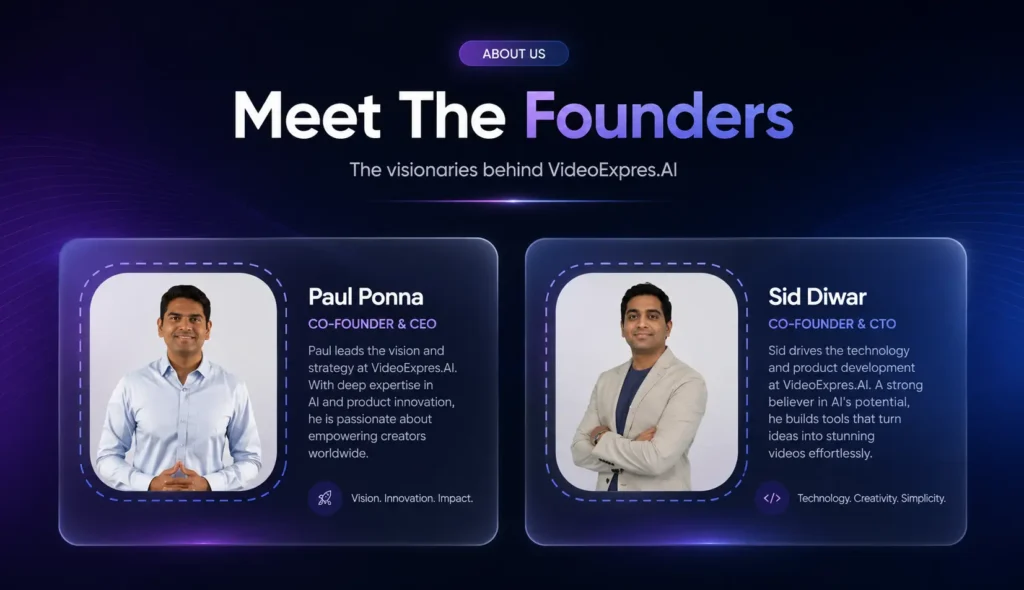
Behind every product is a team that decided the current options weren’t good enough, and VideoExpress AI is no exception.
Paul Ponna and Sid Diwar are the two names behind it, and neither is new to this space. Both have built a reputation in internet marketing and software development, with previous releases like Talking Photos, Video Creator, and Human Pal already under their belt.
What tends to set their work apart is a preference for tools that actually do what they claim, rather than ones dressed up with inflated promises.
VideoExpress AI follows that same pattern: it’s another product built around solving a real problem for creators, not just riding the AI video hype cycle.
What Will You Discover Inside VideoExpress AI?
Here’s a closer look at the features that make up the platform, and what each one is actually useful for.
1. All-in-One Multipurpose AI Video Platform
VideoExpress AI bundles multiple video tools into a single platform, so you’re not stitching together three or four separate apps to finish one project. That consolidation alone makes it a practical option for storytellers, marketers, and educators who’d otherwise be juggling different subscriptions for different tasks.
2. Text Prompt to AI Video
Type out a description or script, and the platform converts it into a video clip. It’s built for exactly the kind of content that needs to move fast, marketing videos, presentations, and social posts, where waiting on a full production cycle isn’t realistic.
3. Image to AI Video
The Image-to-Video tool takes a static photo and adds motion and depth to it, turning a flat image into something that feels alive on screen. It’s a small addition that makes a real difference for storytelling and viewer engagement.
4. Multilingual Talking Photos
This feature animates any photo into a talking or singing video, complete with realistic lip-sync. It works whether you’re animating a single face or a multi-character scene, and the output holds up well enough to feel natural rather than gimmicky.
5. Consistent Characters
One of the harder problems in AI video is keeping the same character looking the same across multiple scenes. VideoExpress AI’s consistent character feature handles that, which matters a lot if you’re building branded content or telling a story that spans more than one clip.
6. AI Video Inpainting
This lets you swap out specific elements within a video, turn a house into a castle, or a cat into a lion, without touching anything else in the frame. It opens up a lot of creative flexibility that would otherwise require manual editing.
7. AI Motion Brush
The Motion Brush tool animates specific parts of an image, like making water ripple or flames flicker, while leaving the rest of the frame untouched. It’s one of the more genuinely impressive tools in the platform.
8. AI Video Object Removal
Need to remove or add an object in a shot? This tool does it in a single click, saving you from having to re-shoot or start the clip over from scratch.
9. AI Face Swap
This feature lets you integrate specific faces into your videos, which is useful for personalization, whether that’s a client’s face for a custom project or your own for a more relatable presence on camera.
10. Subtitles and Captions
The platform generates subtitles in multiple aspect ratios, 16:9, 9:16, 1:1, and 4:5, so your content is ready for whichever platform you’re posting to without needing to reformat manually.
11. Enhanced HD Video Creation
VideoExpress AI outputs Full HD video directly, so there’s no need to route your clips through a separate upscaling tool before they’re ready to publish.
Step-by-Step Guide to Using VideoExpress AI
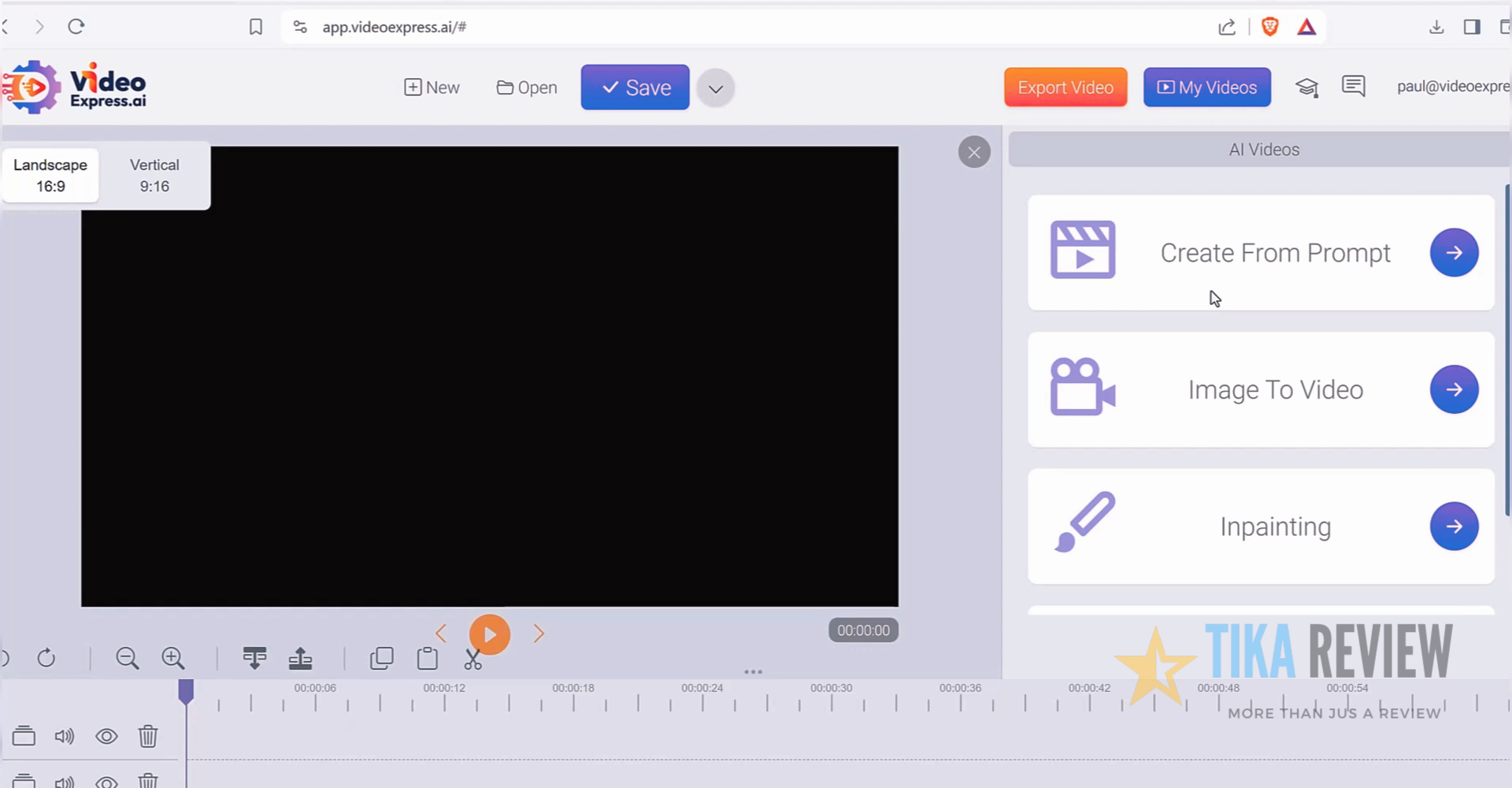
Getting a finished video out of VideoExpress AI takes a handful of steps, and none of them require prior editing experience. Here’s how the process actually works.
Step 1: Define Your Style
Start by picking the visual direction for your video, cinematic, animated, or Pixar-style 3D. This sets the tone for everything that follows, so it’s worth choosing based on where the final video will be used.
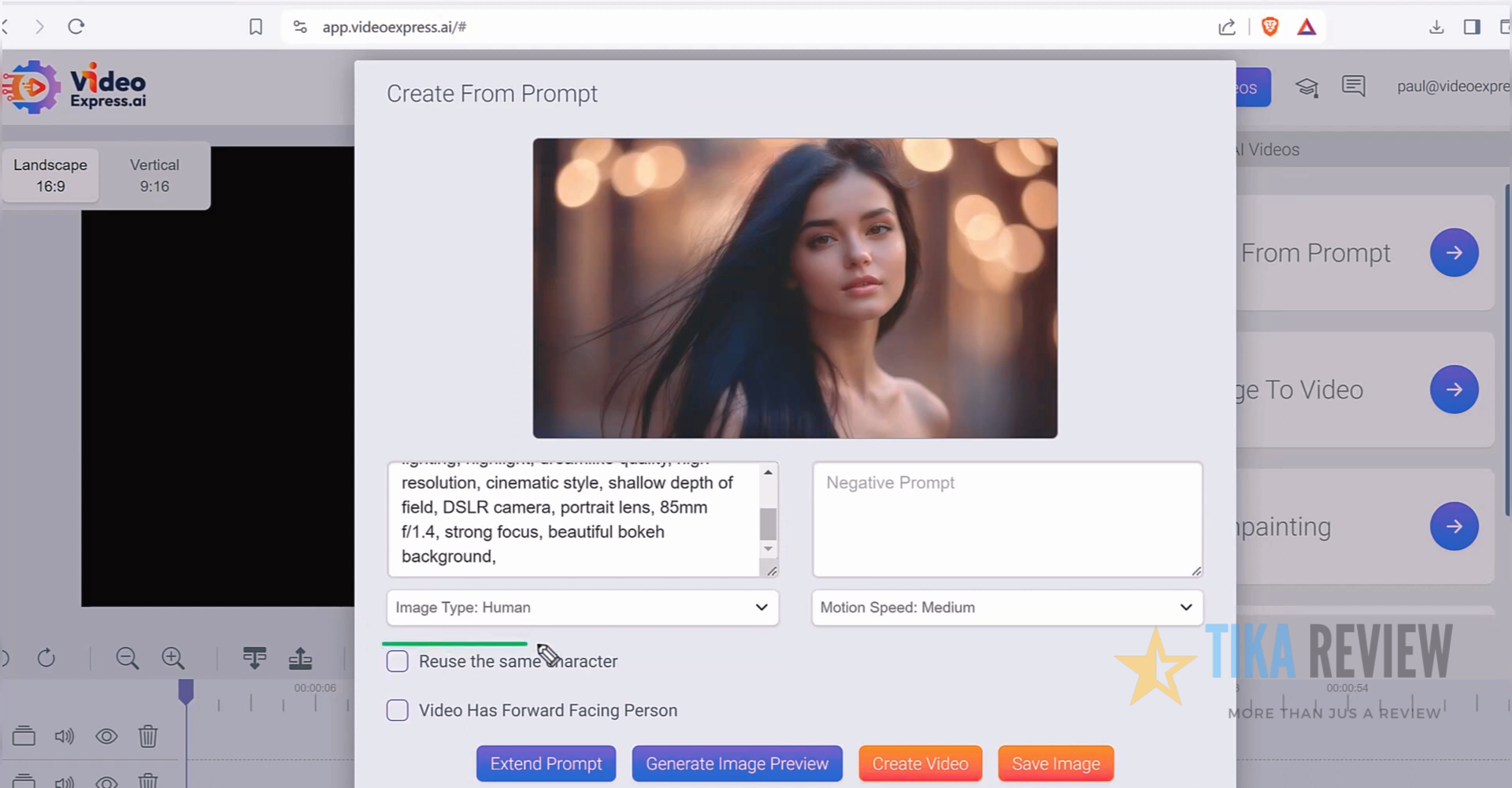
Step 2: Craft Your Prompt
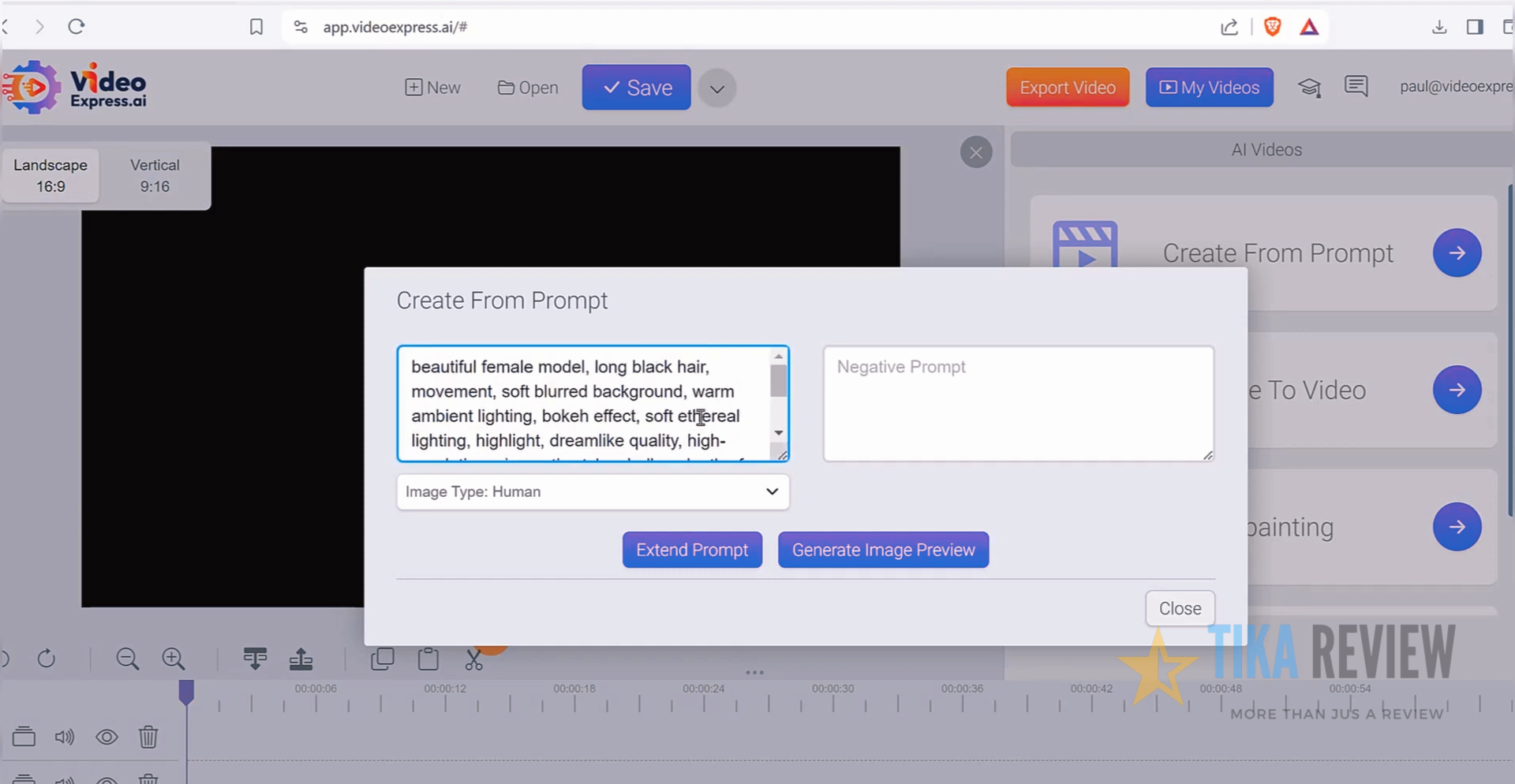
Next, write out your script or describe the scene in plain language. Something like “a female model with long black hair walking through a vibrant cityscape” is enough for the AI to work with, the more specific the description, the closer the output tends to match what you had in mind.
Step 3: Generate Frames
The platform then produces an initial preview based on your prompt. If your project spans multiple scenes, this is where the consistent character feature comes in, keeping the same character recognizable from one clip to the next.
Step 4: Add Effects and Voiceovers
Once you’re happy with the base footage, you can layer in:
- Transitions
- Background music
- Text-to-speech voiceovers
This is where a raw clip starts feeling like a finished piece of content.
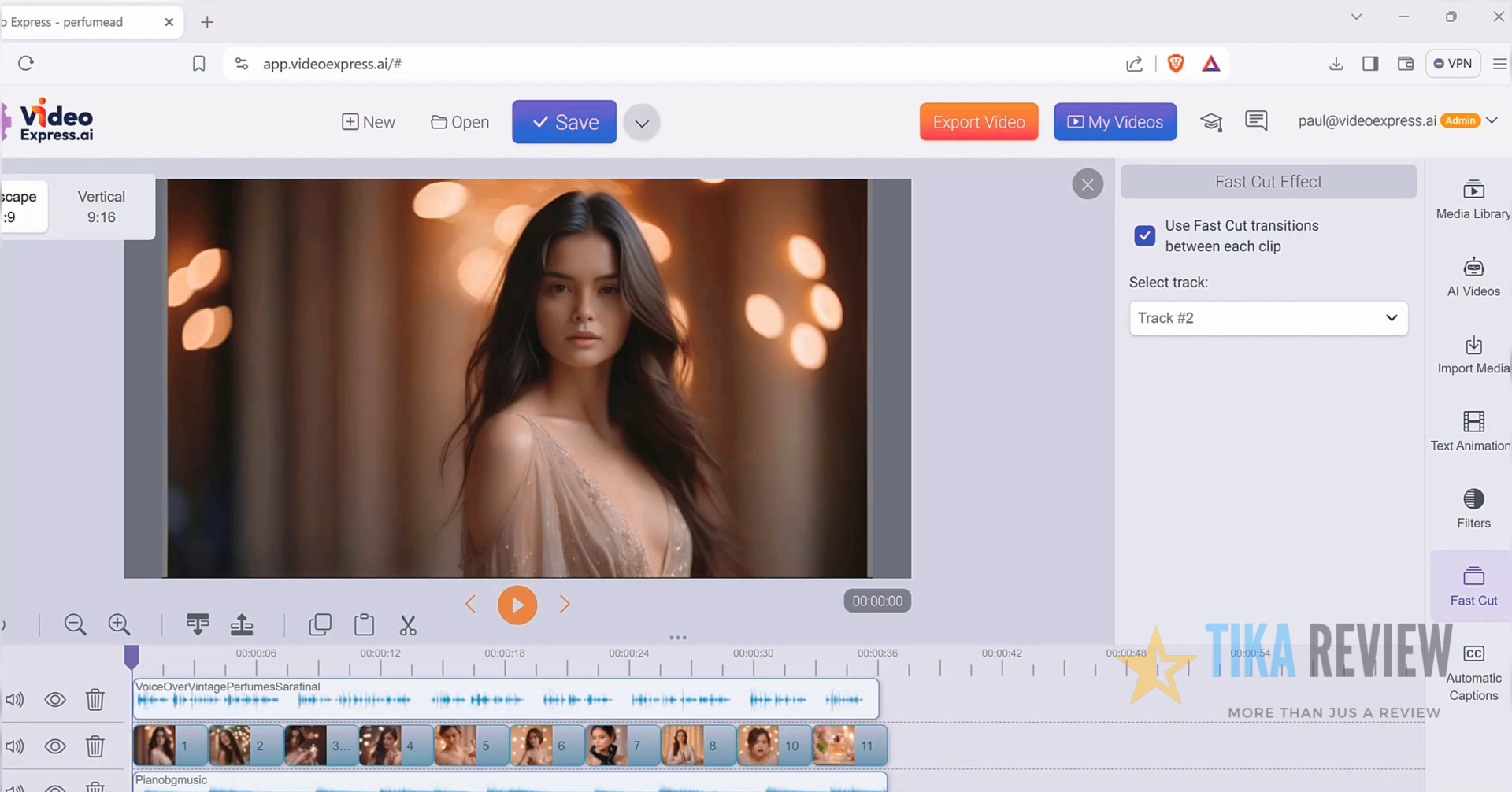
Step 5: Merge and Export
Finally, combine your individual clips into one continuous video using the built-in editor, then export the finished product in Full HD.

Who Should Try VideoExpress AI?
VideoExpress AI works well for a fairly broad range of people, though some will get more mileage out of it than others:
- Content Creators: Producing clips for YouTube, TikTok, or Instagram without needing a full production setup.
- Marketers: Turning around ads, promotional content, and presentations on a tighter timeline than traditional video production allows.
- Small Business Owners: Building branded video content in-house instead of outsourcing it to a professional editor.
- Educators: Putting together tutorials and instructional videos without needing to learn editing software from scratch.
What ties these use cases together is the combination of low cost and a shallow learning curve, which is exactly why it works for someone just getting started as well as someone who’s been creating content for years.
My Experience with VideoExpress AI
VideoExpress AI has genuinely reshaped how I approach content creation. I work across several platforms, so I needed something that was simple enough to use daily but still capable of producing results I’d actually put my name on. VideoExpress AI came close to hitting that mark.
What I Loved:
- Ease of Use: The interface doesn’t require any technical background to navigate. I went from a blank prompt to a finished, polished video in just a few clicks, no tutorials required to get the basics down.
- Text-to-Video Performance: I put the text-to-video feature to the test by building a short marketing ad from scratch. In a matter of minutes, my script turned into a full video complete with animations and transitions that looked far more polished than I expected from a quick AI pass.
- Customization Options: The consistent character feature was probably the most useful tool I tried. I used it to build a brand mascot for a client’s project, and it kept that character looking the same across every scene, which is harder to pull off than it sounds.
- High-Quality Output: Every video I generated came out in Full HD (1080p), which meant I could hand it straight to a client or post it online without running it through any extra processing.
Challenges I Faced:
- Keyword Restrictions: Certain words triggered content flags. This became a real issue when I tried producing educational videos touching on health-related topics.
- Scene Length Limitations: Each generated scene runs 5 to 10 seconds, so longer projects meant stitching several clips together manually. The built-in editor made that workable, but it did add extra steps.
- Learning Curve: The platform is straightforward overall, but it took a few attempts before I understood how to phrase prompts for consistently strong results. The built-in tutorials helped speed that up.
Results:
Over the course of a week, I used VideoExpress AI to put together:
- A batch of short TikTok videos for a client in the fashion industry.
- An explainer video for an e-learning course, with subtitles in multiple languages.
- A branded ad built around a custom character with consistent visuals throughout.
Every project came together faster and at a fraction of what it would’ve cost to hire outside help or rely on traditional editing software.
Both clients and viewers responded well to the final output.
VideoExpress AI Pricing
VideoExpress AI offers two main entry points depending on how much of the platform you want access to, and how much you’re willing to pay upfront.
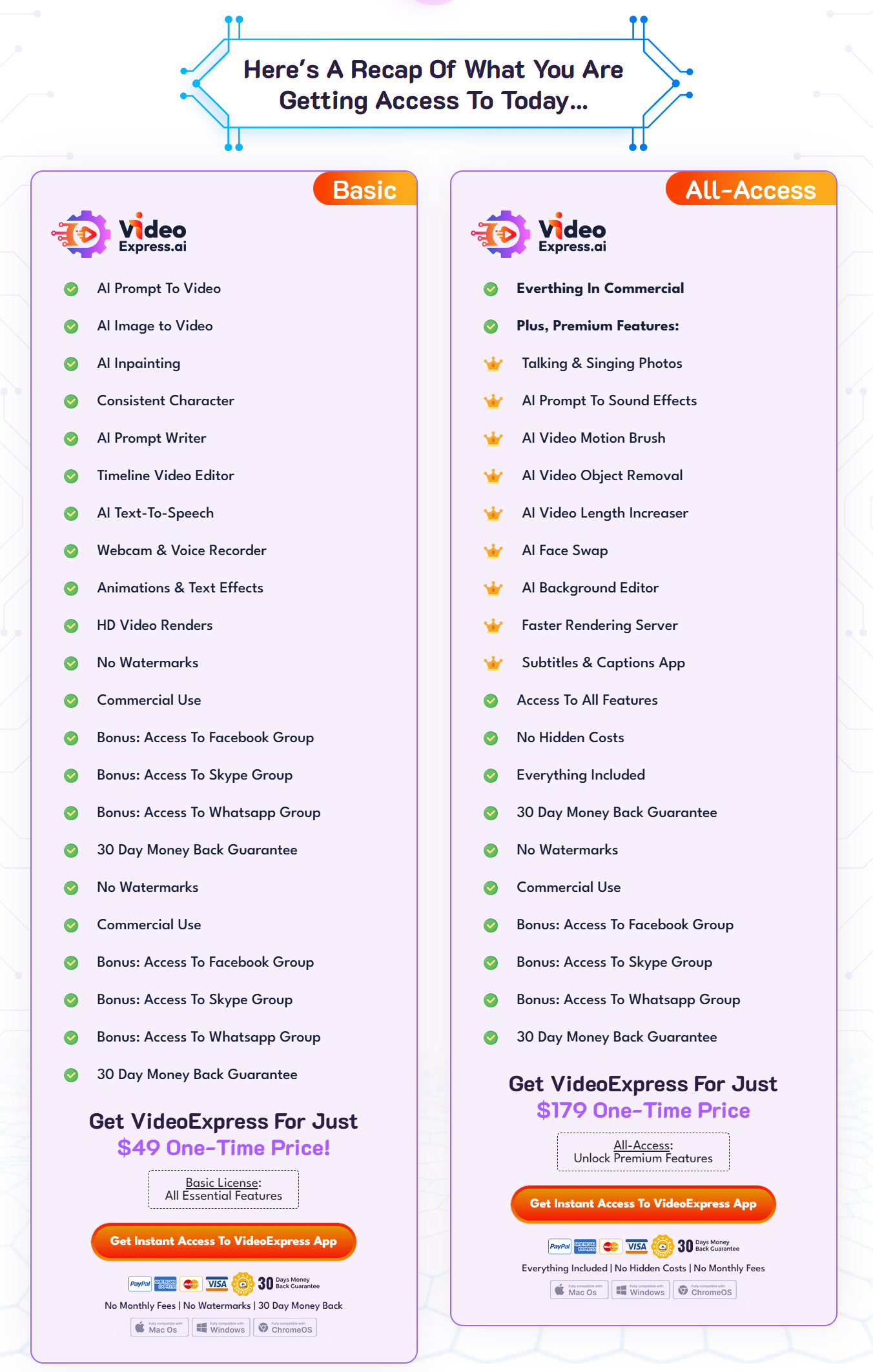
All Access Plan – $179 (One-Time Payment)
This is the full package, every feature unlocked, with no hidden costs or upsells waiting down the line. The All Access Plan includes:
- Unlimited video creation.
- Advanced tools like AI inpainting, motion brush, and face swap.
- Multilingual subtitle generation.
- High-definition video output (1080p).
- Ongoing upgrades and customer support.
If you want everything the platform offers without worrying about running into a paywall mid-project, this is the plan built for that.
Basic Offer – $49 (One-Time Payment)
The Basic Offer is a lower-cost way to test the platform’s core functionality before committing further. That lower price comes with real trade-offs, though:
- Reduced video creation capacity.
- No access to advanced tools like face swap and motion brush.
The Basic Offer is a lower-cost way to test the platform’s core functionality before committing further. That lower price comes with real trade-offs, though:
- Reduced video creation capacity.
- No access to advanced tools like face swap and motion brush.
My Recommendation
If you’re planning to use VideoExpress AI regularly or need its full feature set, the All Access Plan at $179 is the better long-term value.
It avoids the incremental cost of upsells and gives you everything upfront.
The Basic Offer at $49 makes sense if you’re just testing the waters or working with a tighter budget, but go in knowing you’ll likely hit upsell prompts once you want to unlock the platform’s more advanced tools.
Whichever plan you choose, it’s worth matching it against how often you’ll actually use the platform, since that determines whether the upfront cost pays off.
The Upsells
If you go with the Basic Offer ($49), expect to run into upsell prompts fairly quickly.
They’re optional, but a few of them address gaps that the Basic plan leaves open.
Upsell 1: Elite Plan – $89
The Elite Plan fills in most of the advanced functionality that’s missing from the Basic tier. Here’s what it adds:
TalkingPhotos Lite:
- Animates photos into talking or singing videos.
- Includes realistic lip-sync, eye blinks, and face-swapping.
- Capped at 100 renders per month.
Text to Sound Effects (SFX):
- Generates sound effects from text prompts.
- Adds a layer of audio realism that makes videos feel less flat.
AI Video Motion Brush:
- Animates specific parts of an image, like rippling water or flickering flames.
- Produces convincing motion with very little manual input.
Video Object Removal:
- Strips unwanted objects out of videos or images using AI.
AI Video Length Increaser:
- Extends scenes by up to 10 seconds through AI frame generation.
AI Face Swap:
- Integrates specific faces into animated content, useful for personalization.
Express Video Generation:
- Cuts down processing time on clip generation.
Increased Limits:
- Raises the monthly clip cap to 6,000 (up from 3,000 on Basic).
- Unlimited image renders.
If you’re working on larger projects or need faster turnaround, the Elite Plan is where the platform starts feeling genuinely production-ready.
Upsell 2: VidSubtitle Tool – $39
This is a standalone add-on focused entirely on subtitles, useful for making content more accessible and easier to follow across different audiences.
Subtitle Creation:
Auto-generates captions for any video that includes voiceover.
Custom Animation Options:
- Controls how subtitles appear and move within the video.
- Built for a more polished, professional look.
Note: this comes bundled into the All Access Plan ($179), so there’s no need to buy it separately if you’ve already gone with that option.
If you’ve purchased the Basic Offer and regularly produce educational, promotional, or multilingual content, this is one of the more practical upsells to consider.
My Recommendation
If you want more creative range and higher limits without jumping to the full package, the Elite Plan ($89) is a solid middle ground.
Combined with the Basic Offer, that brings your total to $138, still under the All Access price, but only if you don’t also need the subtitle tool.
For accessibility and multilingual content specifically, the VidSubtitle Tool ($39) is worth adding if you’re staying on the Basic plan.
That said, once you start stacking upsells, the math tends to favor the All Access Plan ($179) anyway, since it includes everything from the start and removes the need to piece together add-ons as you go.
Pros
- Affordable pricing.
- Extensive feature set tailored for creators and marketers.
- Multilingual capabilities.
Cons
- Limited scene duration.
- Restrictions on certain keywords.
VideoExpress AI is an outstanding tool for anyone looking to streamline their video creation process without compromising on quality.
While it may not match the hyper-realistic outputs of pricier platforms, it offers incredible value for its cost.
If you’re a marketer, educator, or content creator, this software is worth exploring.
With its intuitive features and budget-friendly pricing, VideoExpress AI can help you unlock your creative potential and bring your ideas to life.
Ready to revolutionize your content game?
Frequently Asked Questions
Individual scenes generate in 5 to 10 second increments. For longer content, you’ll need to merge multiple clips using the built-in editor, or use the AI Video Length Increaser (available in the Elite Plan) to extend scenes up to 10 seconds.
Yes. VideoExpress AI flags certain keywords, which can affect projects touching on sensitive topics, health-related educational content is one area where this has come up in testing.
Yes. The platform includes multilingual subtitle generation and multilingual talking photo animation, making it usable for creators producing content across different language markets.
Yes. The interface doesn’t require editing experience or technical skills, and most users can go from prompt to finished video within a few clicks. There’s a modest learning curve around writing effective prompts, but built-in tutorials help shorten that.
Videos render in Full HD (1080p) by default, without needing to route footage through a separate upscaling or enhancement tool.
It’s best suited for content creators, marketers, small business owners, and educators who need to produce video regularly but don’t have the budget or technical background for traditional production workflows or expensive subscription-based AI tools.
If you’ve made it this far, I genuinely want to thank you for taking the time to read through this review.
I appreciate you spending part of your day on this, and I hope it gave you a clear enough picture of VideoExpress AI to decide whether it’s the right fit for your projects.
If you’re still comparing your options, it’s worth checking out my breakdown of the best AI video generators currently on the market, it puts VideoExpress AI side by side with the other tools worth considering.
The AI video space moves fast. New models, features, and platforms show up constantly, and what’s true about a tool today might change in a few months. I’ll keep testing these platforms, updating my reviews, and publishing new guides as things develop, so there’s always current, practical information here when you need it.
This website exists because AI video generation is something I’m genuinely into, not just a topic I write about.
I like digging into new tools, figuring out what actually holds up under real use, and sharing that honestly so creators can make smarter decisions without wasting time or money on the wrong platform.
Thanks again for reading, and I hope to see you in the next guide.
Happy creating!